




Kraken Wins First Fed Access for Crypto, Anduril Eyes $60B Round, Anthropic Battles Pentagon Ban
By Stableton on March 11th, 2026
Finance, defense, and AI governance are colliding. Kraken becomes the first crypto firm with Federal Reserve access, Anduril targets a $60B valuation, and Anthropic challenges the Pentagon over AI restrictions. Let’s dive in…
THIS WEEK’S BREAKING NEWS
Federal Reserve opens payments rails to Kraken
Kraken received a Federal Reserve master account, allowing the exchange to connect directly to U.S. payments infrastructure, including Fedwire. The one-year approval from the Kansas City Fed makes Kraken the first crypto company with direct access to the central bank’s payments system, a move that signals deeper integration between digital assets firms and traditional finance. (1)
STABLETON MORNINGSTAR PITCHBOOK UNICORN 20 STRATEGY

The Stableton Morningstar PitchBook Unicorn 20 strategy is the world’s first passive, systematic, and semi-liquid approach to investing in the Top 20 privately held tech companies before they go public.
This strategy offers a straightforward and cost-effective way to gain exposure to leading private technology companies within a single portfolio. With no performance fees and enhanced liquidity, it offers a unique alternative to traditional private market investments.
PORTFOLIO NEWS
Anduril targets $4.3B revenue amid expansion
Anduril expects revenue to reach about $4.3B this year, nearly doubling from prior levels. Despite projected sales exceeding $4B, the company anticipates losses above $1B and does not expect to reach adjusted EBITDA profitability until 2030. (2)
Anduril eyes defense manufacturing expansion in Japan
Anduril is exploring investments to expand defense manufacturing capacity in Japan, proposing a local production model similar to its Ghost Shark drone program in Australia. The company is in discussions with Tokyo on potential collaboration as Japan increases defense spending, including a ¥128.7B coastal drone shield program within its ¥9T 2026 defense budget. (3)
Thrive and Andreessen Horowitz to lead $60B Anduril round
Thrive Capital and Andreessen Horowitz are co-leading a multibillion-dollar investment in Anduril Industries that would value the autonomous weapons developer at $60B, roughly doubling last year’s $30.5B valuation. The round, which also includes Lux Capital and Founders Fund, remains unclosed as terms may still change. (4)
Anthropic challenges Pentagon blacklist in federal court
Anthropic sued the Trump administration after the Pentagon labeled the company a “supply chain risk,” restricting use of its Claude AI in U.S. defense contracts. (5) Dario Amodei said the designation applies only to projects directly tied to the Department of War and will not affect the vast majority of Anthropic’s commercial customers. (6)
Google, Microsoft back Anthropic availability on cloud
Google said it will continue offering Anthropic’s Claude models through Google Cloud for non-defense projects after the Pentagon labeled Anthropic a supply chain risk. Microsoft and Amazon issued similar guidance, confirming Anthropic AI remains available on their platforms outside Department of War contracts. (7)
Canva climbs to third in AI tool usage
Canva ranks third in monthly web usage among generative AI web tools, behind ChatGPT and Gemini, according to analysis by Andreessen Horowitz. Canva surpassed tools including Claude, Grok, DeepSeek, and Perplexity, driven by adoption of its Magic Studio AI features for generating design assets, marketing materials, and websites. (8)
Cursor expands agentic coding with Automations
Cursor introduced Automations, a system that automatically launches coding agents based on triggers such as code changes, Slack messages, or timers. The tool aims to manage complex agentic development workflows as engineers oversee multiple AI agents. Cursor’s growth remains strong, with annual revenue surpassing $2B and roughly 25% share among generative AI coding tool users. (9)
Databricks deepens European AI push in Amsterdam
Databricks is opening a 13,000 sqm office in Amsterdam’s Zuidas district, reinforcing the city as its largest R&D hub in EMEA. The site could host up to 1,000 employees and support growing demand for AI tools such as Lakebase and Genie. The expansion follows more than $7B in recent investment, valuing the company at $134B. (10)
Google cuts Play Store fees after Epic battle
Google agreed to lower Play Store commissions following its antitrust case with Epic Games. Proposed changes reduce baseline fees from 15–30% to roughly 10–20% and introduce a 5% payment processing option while allowing alternative app stores with certification. The move follows a 2023 ruling that labeled Google’s Play Store system an illegal monopoly. (11)
Figure AI trains Helix 02 for complex home tasks
Figure AI showed its Helix 02 system performing full-room living room cleanup using a single end-to-end neural model. The robot navigates cluttered spaces while manipulating objects, cleaning surfaces, and organizing items with coordinated two-handed actions. The system learns new behaviors from additional data without new algorithms, highlighting progress toward general-purpose humanoid robotics. (12)
Federal Reserve opens payments rails to Kraken
Kraken received a Federal Reserve master account, allowing the exchange to connect directly to U.S. payments infrastructure, including Fedwire. The one-year approval from the Kansas City Fed makes Kraken the first crypto company with direct access to the central bank’s payments system, a move that signals deeper integration between digital assets firms and traditional finance. (13)
Nasdaq taps Kraken platform for blockchain equities
Nasdaq is partnering with Kraken parent Payward to develop tokenization infrastructure that moves traditional securities onto blockchain networks. The collaboration will use Kraken’s xStocks platform to support tokenized equities, corporate actions, and shareholder engagement as exchanges and brokers expand blockchain-based financial markets. (14)
OpenAI launches GPT-5.4 with Pro and Thinking models
OpenAI released GPT-5.4, introducing Pro and Thinking variants aimed at professional workloads. The model supports context windows up to 1M tokens, improves token efficiency, and reduces factual errors by 33% versus GPT-5.2. OpenAI also introduced Tool Search in the API to reduce token usage when models call external tools. (15)
OpenAI and DeepMind staff back Anthropic lawsuit
Anthropic received support from more than 30 employees at OpenAI and Google DeepMind in its lawsuit against the U.S. Department of Defense. The employees filed an amicus brief arguing the Pentagon’s “supply chain risk” designation was arbitrary after Anthropic refused to allow its AI to be used for autonomous weapons or mass surveillance. (16)
OpenAI and Oracle halt Stargate data center expansion
Oracle and OpenAI scrapped plans to expand their Stargate AI data center in Abilene, Texas, after negotiations stalled over financing and shifting compute demand. The move opens the site for potential leasing by Meta, with Nvidia helping facilitate discussions to ensure its chips remain deployed in the project. (17)
OpenAI adds guardrails to Pentagon AI deal
OpenAI revised its Pentagon agreement after backlash from users and AI researchers. Sam Altman said the updated contract explicitly bans using OpenAI systems for domestic surveillance of U.S. citizens and restricts intelligence agencies from deploying the technology without further approvals, following criticism that the original deal was rushed. (18)
OpenAI acquires Promptfoo to strengthen AI security
OpenAI plans to acquire Promptfoo to strengthen security and evaluation tools for enterprise AI agents. Promptfoo’s red-teaming and vulnerability testing capabilities will be integrated into OpenAI’s Frontier platform, helping companies detect risks such as prompt injection, data leaks, and unsafe agent behavior before deployment. (19)
CoreWeave powers Perplexity’s next AI inference phase
Perplexity AI signed a multiyear infrastructure agreement with CoreWeave to power AI inference workloads. Perplexity will run its Sonar model and search APIs on CoreWeave’s Nvidia GB200 clusters, highlighting the industry shift from training large models toward scaling inference for real-time AI applications. (20)
Revolut seeks U.S. banking license for expansion
Revolut applied for a U.S. national bank charter with the OCC and FDIC as it seeks to expand in the American market. A license would allow the $75B fintech to offer insured deposits and operate without partner banks, supporting its strategy to scale beyond its 70M global users. (21)
Visa and Stripe scale stablecoin cards worldwide
Visa and Stripe plan to expand their stablecoin-linked card program to more than 100 countries through Stripe-owned Bridge. The cards allow users to spend stablecoin balances from wallets such as MetaMask and Phantom across Visa’s network of 175M merchants, signaling deeper integration of stablecoins into global payments. (22)
Stripe expands AI agent payments with network tokens
Stripe expanded its Shared Payment Token system to support tokens from Visa and Mastercard, enabling secure payments for AI agents. The update also adds buy-now-pay-later providers Affirm and Klarna, helping capture user intent while protecting payment credentials in emerging agent-driven commerce. (23)
OTHER NEWS
ByteDance signs 500MW China data center deal
ByteDance signed a 500MW data center capacity agreement with Vnet Group to support expanding compute demand in China. Vnet currently operates more than 50 data centers across 30 cities and is raising capital to grow its footprint as large tech companies scale AI and cloud infrastructure. (24)
Celonis says customers saved $10B with process intelligence
Celonis said its customers have generated more than $10B in operational savings using its Process Intelligence platform. The company positions its technology as an intelligence layer for enterprise AI, helping organizations analyze workflows, orchestrate AI agents, and optimize operations across complex systems and data environments. (25)
Cerebras taps Morgan Stanley for renewed IPO push
Cerebras Systems hired Morgan Stanley to lead a renewed IPO attempt that could raise about $2B. The company previously withdrew its filing in 2025 and is now preparing investor meetings. Cerebras, valued at around $23B after a recent funding round, is positioning its AI chips as an alternative to Nvidia. (26)
Shield AI tests V-BAT drone in NATO Arctic exercise
Shield AI demonstrated its V-BAT drone during NATO’s HEIMDALL 26 Arctic exercise in Norway, showing ship-based intelligence, surveillance, and reconnaissance capabilities in extreme cold conditions. The vertical takeoff drone conducted maritime and land missions without modifications, integrating ISR data into NATO’s multi-domain command systems. (27)
Vast Data raises $1B at $30B valuation
Vast Data raised $1B at a $30B valuation, with more than half of the round consisting of secondary share sales by early investors and employees. The AI data platform provider has rapidly scaled revenue, with estimates suggesting roughly $2B ARR by the end of 2025. Investors include Nvidia and Goldman Sachs. (28)
CHART OF THE WEEK
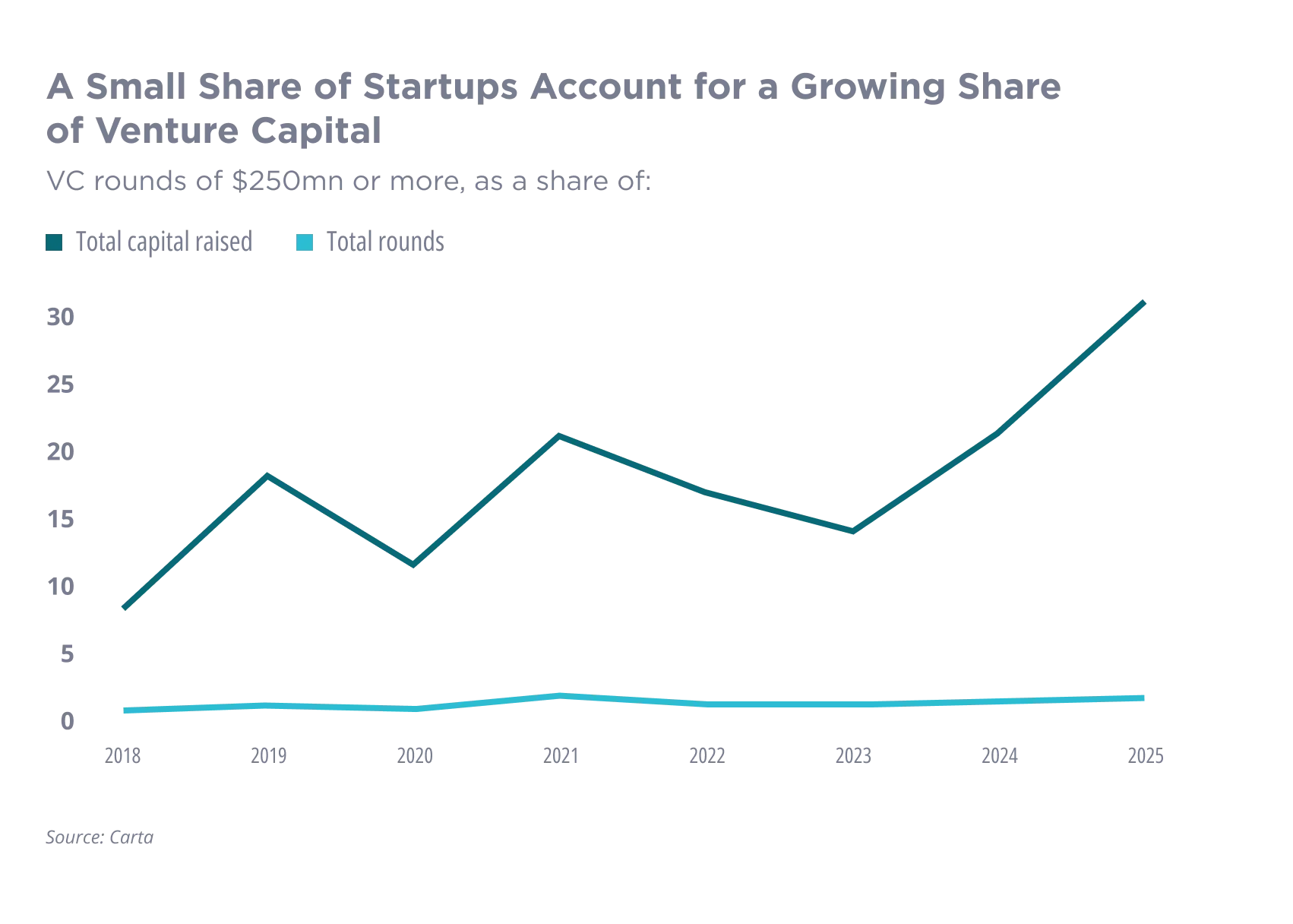
Large venture rounds are capturing an outsized share of total capital while representing only a small fraction of the overall deal count. This reflects a clear shift in investor behavior. Capital is flowing toward companies where outcomes feel increasingly binary and where the cost of underfunding is viewed as the greater risk. Leading AI firms are raising aggressively, often returning to markets within months to maintain momentum. Investors are accepting dilution as a rational tradeoff when growth rates and market positioning are accelerating at unprecedented speed.
This dynamic reinforces a winner-takes-most environment. A narrow group of late-stage companies is absorbing the majority of funding as investors prioritize certainty, scale, and category leadership. The Stableton Morningstar PitchBook Unicorn 20 strategy focuses on the private technology leaders where capital concentration, growth, and long-term value creation intersect.
THE UNTOLD UNICORN STORY
Canva: 100 rejections to a design empire
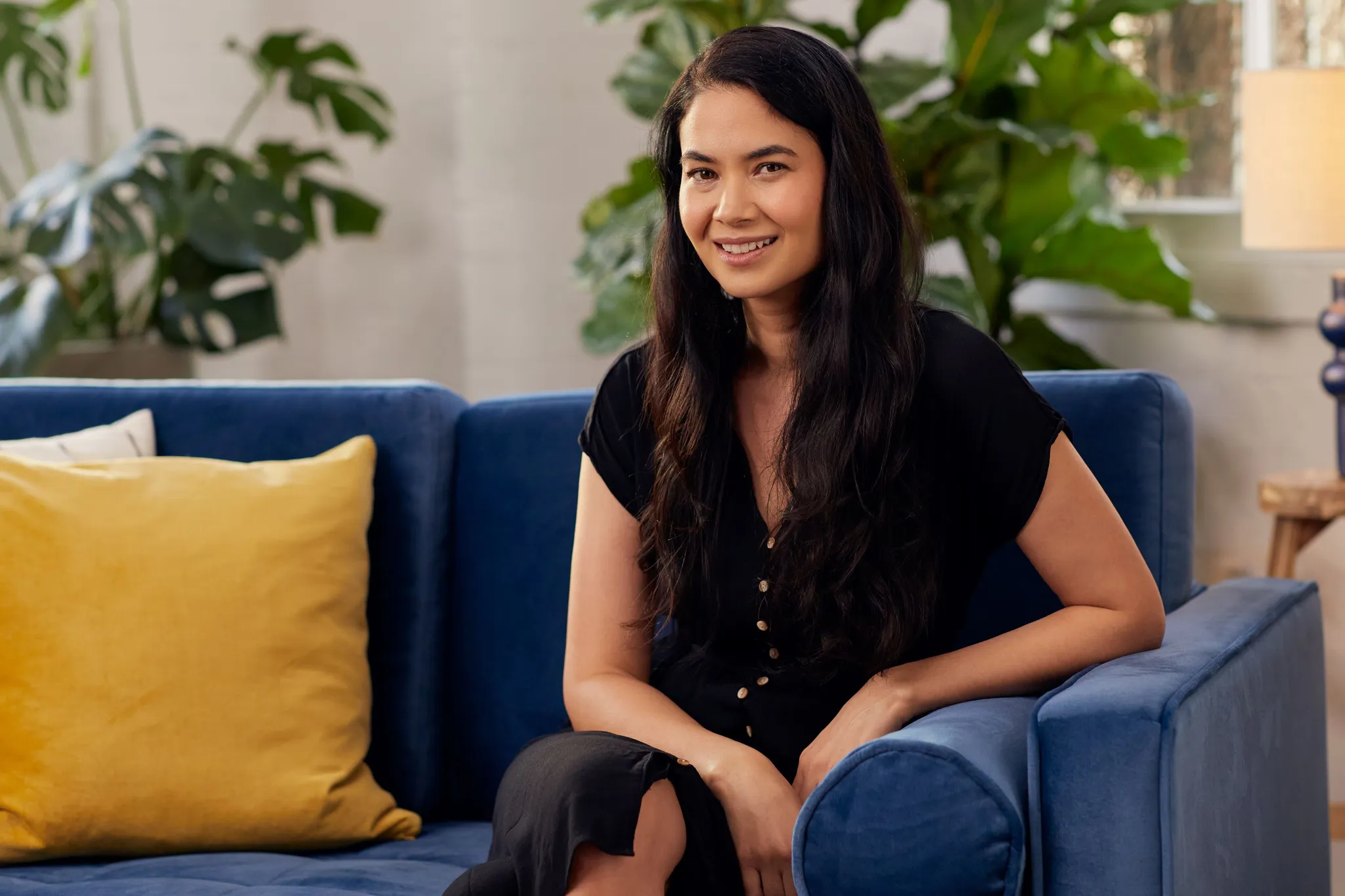 Melanie Perkins, Canva CEO and Founder. (29)
Canva began in a living room in Perth, Australia, where 19-year-old Melanie Perkins and her boyfriend Cliff Obrecht launched Fusion Books, a drag-and-drop yearbook design tool for schools. Perkins had been teaching students graphic design and grew frustrated watching them struggle with complex software like Photoshop and InDesign. The yearbook business proved their concept worked, but when they tried to pitch a broader design platform to Silicon Valley investors, they were rejected over 100 times across three years. (30)
Their persistence eventually paid off eventually. With the help of Google Maps co-founder Lars Rasmussen and ex-Google designer Cameron Adams, Canva officially launched in 2013 and has since grown into one of the world's most valuable private companies. (31)
Fun Fact: Perkins and Obrecht learned to kitesurf just to impress investors. Venture capitalist Bill Tai invited them to MaiTai, his exclusive retreat in Maui for kitesurfing enthusiasts. Neither had ever touched a kite, but they spent months learning the dangerous sport to earn a spot. The connections they made there led to early funding. (32)
Did you know? Canva is one of the 20 companies in our Stableton Morningstar PitchBook Unicorn 20 strategy, a systematic, index approach that aims to outperform public benchmarks with low-cost fees, and without a performance fee. Click below for more information.
SOURCES
1 - Financial Times, 2 - The Information, 3 - Japan Times, 4 - Wall Street Journal, 5 - Al Jazeera, 6 - Financial Times, 7 - CNBC, 8 - Smart Company, 9 - Tech Crunch, 10 - Databricks, 11 - New York Post, 12 - Figure AI, 13 - Financial Times, 14 - Reuters, 15 - Tech Crunch, 16 - Tech Crunch, 17 - Bloomberg, 18 - BBC, 19 - Open AI, 20 - AI Business, 21 - Financial Times, 22 - The Block, 23 - American Banker, 24 - Bloomberg, 25 - IT Wire, 26 - Bloomberg, 27 - ASD News, 28 - Tech In Asia, 29 - Startup Bell, 30 - Fortune, 31 - CNBC, 32 - Canva



Every Wednesday, the Navigator delivers a digest of news from our portfolio holdings and key trends shaping private tech investing. Subscribe to receive it directly in your inbox.


